The Four Horsemen of the Apocalypse (1921) Rudolph Valentino
The sonofabitch copied some of my moves!
El Magnifico
I provide professional services in more than one business category.
My non-business side involves my hobby of social dance,
especially Argentine tango and the Latin dances.
The Four Horsemen of the Apocalypse (1921) Rudolph Valentino
The sonofabitch copied some of my moves!
El Magnifico
Ahoy mates!!!
My Circle of Friends dance buddies are signing up for the Stardust dance cruise in January. We're going to turn up the heat in the sunny Caribbean. We have 300 dance party animals signed up already; and the frost is not even on the pumpkin yet. Wow! ...we're going to have a great party.
Details are on my website www.cofparty.com
*PS - If you can't join us in January, I'm taking reservations for a mirror image of the same cruise in March 2008. Call me at 201 933 8098 to sign up.

 Today is the anniversary of the birthday of Natasha Kaminski. She is not here to celebrate with us because her struggle with cancer stole her from us on December 7, 2006. For those of us who miss her so very much, I offer the following thoughts...
A nurse is not here to guide us.
The great one-and-only nurse was strong enough to teach us about courage in the face of physical distress.
A close friend is not here to hug us.
The great one-and-only friend set an example of permanence of spirit for all to follow.
A mom is not here to be a buddy to her child.
The great one-and-only mom has given us her handsome son Michael who has vowed to be the standard bearer of her legacy. He will learn to tango.
A daughter is not here to bring joy and caring to her parents.
The great one-and-only daughter leaves everlasting joyful pride that shines through veils of tears.
A tango dancer is not here to light up a room and inspire others.
The great one-and-only tango dancer lives in every tango step many of us will perform.
The world lost an angel who ascended to heaven on December 7, 2006. Natasha is in another place now, but all of her treasured memories, influence, inspiration, and teachings will be with us forever
The great one-and-only Natasha Kaminski is here and now embedded in our lives and hearts.
My friend Albert Crino is so good at photography. His photo of Natasha at the mirror has captured her beauty and spirit so accurately. It’s a treasure I am proud to share with everyone. Thank you Albert.
Thank you Natasha!
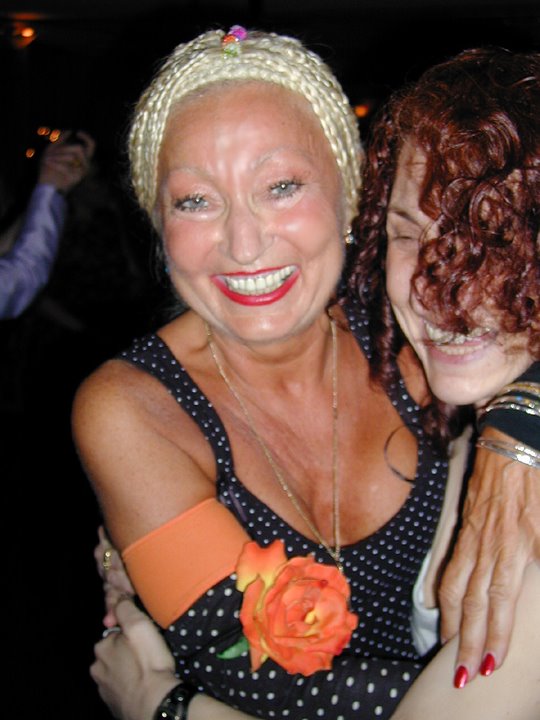 How do you judge a social dancer to be excellent? If a dancer is not a performer, the only worthy judgment can be from the dancer's partners. If in addition, the dancer is wonderful to watch, you then have what I call an extraordinary dancer. My friend Natasha is one of that rare breed. Her love of dance is expressed in Argentine tango.
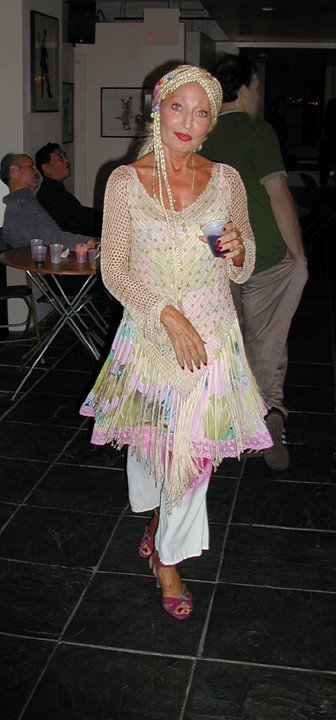
Here, for example, are some wonderful alternative ensembles from my friend Natasha.


PROCEED WITH CAUTION!!! because another reason that Argentine tango is different from other social dances is that its design pushes on the physically acceptable limits of stress and strain of the human body ...especially the bodies of the women. We could assume that the rigorous activities of hot club-style salsa or some of the high energy swing dances may be most physically taxing, but the slow and gentle-looking tango has them beat for wreaking havoc on bones, joints, and muscles. Many of the women in my dance circle of friends are suffering periods of pain in their legs on a daily basis and some may have irreversibly damaged their bodies.
There are primarily two areas of destruction. One is the balls of the feet and the other is at the knee joint. There are also assorted muscles and tendons that get aggravated as well.
Most of the follower's footwork is accomplished on the balls of the feet, either simultaneously or individually. Although most women (and especially tango dancers) are accustomed to high-heeled shoes, the demands of proper tango movements bring the majority of the weight of the body more forward on the foot.
Some of the best dancers are very rarely touching their heels to the floor. If the high-heeled shoe is testing the limit of the human foot in the first place, then it's not too hard to imagine the increased unnatural aspects of balancing the entire body on only the front-most portion of the ball while crunching the toes backward ...then imagine handing that entire weight-load to only one foot ...and now add a twisting and grinding motion to the exercise. Bingo! You've hit the kill-a-foot jackpot ...get thee to a podiatrist!
Then we have those most beautiful and graceful ocho and boleo steps. Do those movements in front of an orthopedic surgeon and his eyeballs may light up in dollar signs. If ochos are executed exactly by the book they can be a reasonably safe maneuver. However, many tango dancers don't always do a complete turning of the torso before they step forward or backward. The resulting step is more of a curvy figure eight involving a rotation at the knee for which the knee was simply not designed to do very often and certainly not while carrying the total weight of the body. It seems that careful execution can prevent problems caused by careless ochoing. There is a very nice looking version of ocho that is called an "overturning" style. The twisting of the weight-bearing leg is harder to avoid in that specific step.
The boleo represents a more serious challenge. The boleo can be performed in many sizes, shapes, and speeds, but all boleo movements put the knee joint to the Twist test. Whether the free foot is lightly placed behind the heel of the weight bearing foot, or if is violently swift-kicked back at a higher level, both movements will definitely aggravate the kneecap and joint of the stationary leg. Of course the swift swipes will absolutely win the Let's-Damage-a-Leg contest. A low sweeping boleo can do even more damage because, in that instance, the knee is additionally bent at ninety degrees or less. However, if most of the low motion is rearward as opposed to turning, then trouble can probably be avoided. I personally like the low stuff anyhow. The upright, toe tapping is a bit too robotic looking for my taste.
Since I'm not a doctor I really can't bore you with a discussion of many other parts of our musculoskeletal framework that can be damaged, but I am an engineer and can easily visualize some of the pertinent mechanical problems. I think we can safely assume that the ankles, hip joints, and backs can be seriously damaged for the same reasons as previously discussed. I'm not advocating a Surgeon General's warning on every dance video and dance lesson brochure, but I do suggest that dance leaders and followers alike should be aware of health hazards that can be successfully managed with proper care and diligence. I suggest that tango dancers should monitor the execution of specific hazardous steps and limit their frequency in choreography. There are many safe toys in the tango bag for us to play with.


